MemoVance Pro Official Website › Blog › Four Rows, Two Amino Acids
Four Rows, Two Amino Acids: What A 2:1 Extract Weighs
Four of the seven rows on this label are the same two amino acids in two salts each, and one of those rows prints the weight of a compound rather than the weight of the active inside it. Both facts change what the panel is telling you, and neither is concealed.
- Swallowed arginine is largely destroyed by arginase before it reaches the bloodstream.
- Citrulline slips past that checkpoint and is converted to arginine in the kidney, which is why it raises plasma arginine more reliably.
- The dose ladder that established this moved the plasma arginine trough only at three grams twice a day.
- Arginine alpha-ketoglutarate has two trials behind it and both used twelve grams a day.
- An extract weight at a 2:1 ratio is not an arginine weight, and this label prints the extract weight.
- Splitting each amino acid across two salts is defensible pharmacology and it also makes a panel look longer.
The problem citrulline solves
Arginine is the substrate nitric oxide synthase works on, so the obvious way to raise nitric oxide is to swallow arginine. The obvious way turns out not to work very well, and the reason is an enzyme.
Arginase breaks arginine down, and it is abundant in the gut wall and the liver. A swallowed arginine dose meets it before reaching the general circulation, and a substantial fraction never arrives. That is the single most important fact about this ingredient and it explains almost everything about how these formulas are built.
Citrulline takes a different route. It is not a substrate for arginase, so it passes the gut and liver intact, reaches the kidney and is converted to arginine there, downstream of the obstacle. Gram for gram, swallowed citrulline raises circulating arginine more reliably than swallowed arginine does.
| Swallowed L-arginine | Swallowed L-citrulline | |
|---|---|---|
| First obstacle | Arginase in the gut wall and the liver | Passes both, largely untouched |
| Where it becomes available | Whatever survives first-pass metabolism | Converted to arginine in the kidney, downstream of arginase |
| Effect on plasma arginine | Blunted by the conversion losses | More reliable, gram for gram |
| Dose that moved something | 4 g a day and above, for blood pressure | 3 g twice a day, to lift the plasma arginine trough |
| On this panel | 200 mg base plus a 200 mg AKG extract | 100 mg as the hydrochloride, 100 mg as the malate |
The fourth row is the one to carry away. Both routes have a threshold and both thresholds are in grams.
The dose ladder that proved it
Schwedhelm's 2008 study in the British Journal of Clinical Pharmacology is the load-bearing citation for this entire category, and it is more useful than most people who quote it realise, because it tested a ladder of doses rather than a single one.
The finding people quote is that oral citrulline raises plasma arginine more effectively than oral arginine. The finding people skip is the dose at which it did so: only the highest rung, three grams twice a day, lifted the plasma arginine trough.
That gives a reader something rare in supplement literature, which is a threshold rather than a direction. Six grams a day is the figure to hold any citrulline row against.
The arginine side has its own threshold from the 2022 dose-response meta-analysis, which detected a blood pressure effect at four grams a day and above and nothing below it. Two ingredients, two thresholds, both in grams.
Four rows, two amino acids
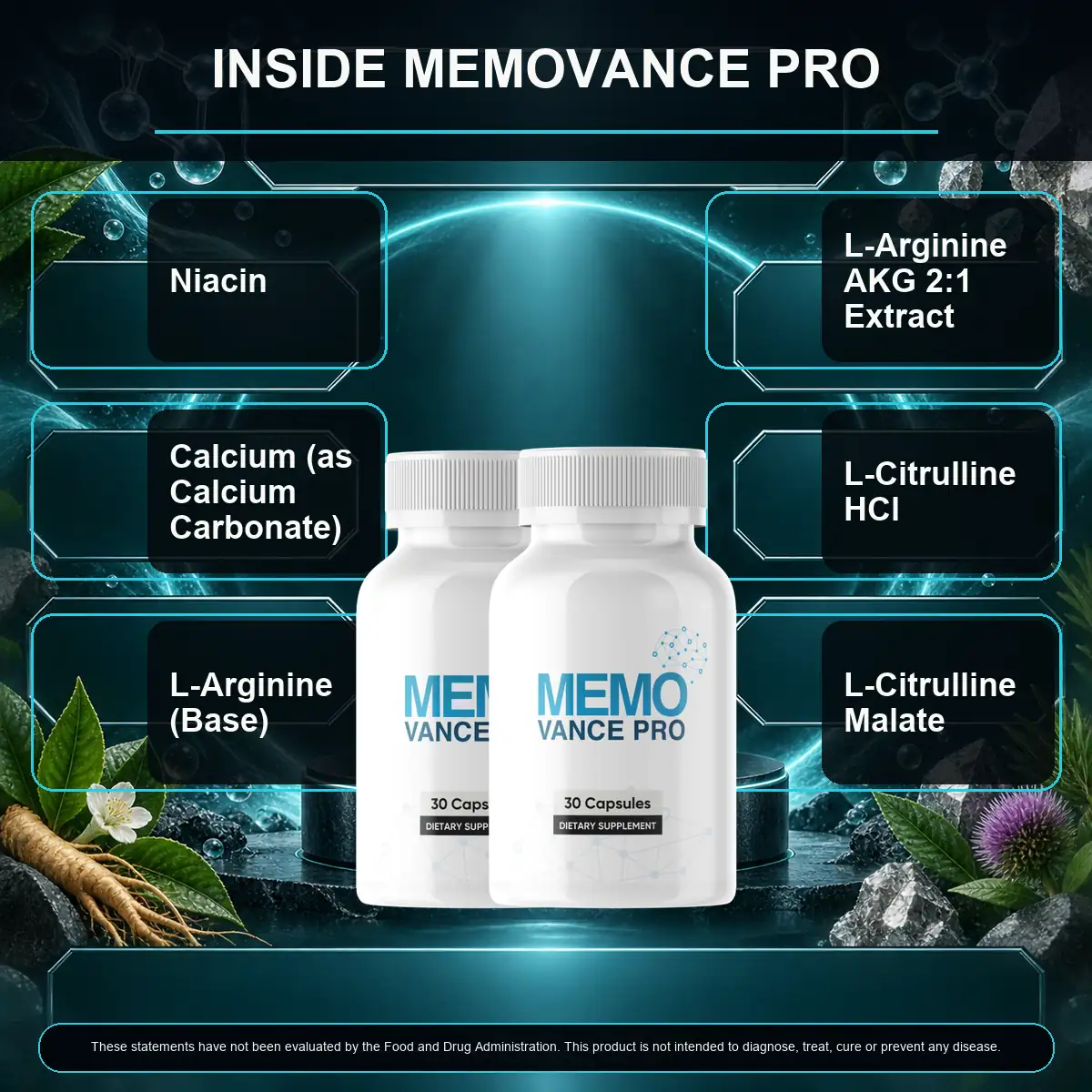
This panel prints each of those amino acids twice, in two different forms, and each form has its own literature.
| Form on this panel | What the form is | What its own literature used |
|---|---|---|
| L-Arginine (base) | The free amino acid | 4 g a day and above |
| L-Arginine AKG 2:1 Extract | Arginine bonded to alpha-ketoglutarate | 12 g a day in both trials that examined it |
| L-Citrulline HCl | The hydrochloride salt | 3 g twice a day in the dose ladder |
| L-Citrulline Malate | Citrulline bonded to malic acid | 6 to 8 g before exercise |
Four rows, two amino acids, four separate literatures. This is why a panel that names only the amino acid has told you less than it appears to.
The right-hand column is why check two on the choosing checklist asks whether the form is named. A panel that says only arginine has concealed the difference between a row with a four-gram threshold and a row whose only two trials used twelve grams.
To this label's credit, both forms are named and both carry their own weight. Nothing is hidden by the split, and a reader who wants the combined figure can add the lines in a second.
The alpha-ketoglutarate question
Arginine alpha-ketoglutarate deserves its own section because its file is thinner than its ubiquity suggests.
The pharmacokinetic and safety study in trained men gave four grams three times a day for eight weeks, which is twelve grams daily. That is the most substantial piece of human work on the ingredient and it is the dose everything else in the AAKG literature is compared against.
The smaller acute studies are more instructive, because they failed. Three grams taken acutely did not improve muscular performance in either trained or untrained men, and 3,700 mg per serving changed neither muscle endurance nor the blood pressure response to resistance training.
Three grams failing is more informative than twelve grams succeeding, for a reader looking at a 200 mg row. It establishes that the shortfall is not a matter of a little less effect: fifteen times this label's amount produced nothing measurable.
See where every MemoVance Pro row sits against its own research
Four amino rows, two amino acids, four separate literatures, and 180 days from the date of purchase to decide what the arithmetic is worth to you.
Two bottles $158 · six bottles $294 · 180-day money-back guarantee
Order MemoVance Pro On The Official WebsiteLot MEM-26/ME-2602 · 30 capsules · one swallowed each day
What a 2:1 extract actually weighs
This is the most technical point in this article and it is worth the two minutes, because it affects how the panel should be read.
The row reads L-Arginine AKG 2:1 Extract, 200 mg. The 2:1 describes the ratio of arginine to alpha-ketoglutarate within the compound, and the 200 mg is the weight of the compound rather than of the arginine inside it.
So the arginine actually delivered by that row is less than 200 mg. How much less depends on a manufacturer's specification the label does not carry, and this desk has no way to convert it from the outside.
That means the total arginine in one capsule sits somewhere between 200 mg and 400 mg, and the label does not resolve it further. It is a small ambiguity in absolute terms, and it sits inside a much larger gap: even the generous reading of 400 mg is a tenth of the four-gram threshold.
- An extract weight is the weight of the whole compound.
- A ratio describes what is inside it, not what fraction is the active you care about.
- A standardisation percentage would be clearer, and this row carries a ratio instead.
- Where a label gives neither, the row cannot be compared with any trial at all.
- This label gives the ratio, which is more than a good deal of this shelf bothers with.
Why a label splits an amino acid in two
Two honest answers, pulling in opposite directions, and both are worth stating.
The generous reading is that the forms genuinely differ. Arginine base and arginine alpha-ketoglutarate have different absorption profiles. Citrulline malate brings a Krebs-cycle acid that citrulline hydrochloride does not, and one of the few positive results at a low citrulline dose came from citrulline paired with a second compound rather than citrulline alone. Pairing and form are not nothing.
The blunt reading is that four rows read as a longer formula than two rows. A Supplement Facts panel is a legal document and it is also the most closely read piece of marketing on any pack, and a formulator knows that.
What settles the question in the buyer's favour is the printing. Both forms carry their own weights, which means the split conceals nothing and a reader can undo it with addition. A proprietary blend would have made the same formula unreadable.
How to check any arginine row in a minute
- Find the serving size. Everything below it is per serving, and a three-capsule serving triples what the panel appears to say.
- Read the form, not just the name. Base, hydrochloride, alpha-ketoglutarate, malate and silicate are five different rows with five different literatures.
- Look for a ratio or a percentage. A 2:1 ratio or a standardisation figure tells you the weight is not all active. No figure at all means the row cannot be compared.
- Add every arginine and citrulline row into one number. One milligram figure for the whole serving.
- Hold it against four grams and six grams. Those are the arginine and citrulline thresholds from the pooled work, and they are the only two numbers you need to remember.
On this bottle that exercise takes about forty seconds and produces 600 mg of arginine and citrulline combined against thresholds of four and six grams. The ingredients page runs the same comparison for all seven rows, and the arithmetic is the same shape every time.
Following a pathway closely is not the same as being allowed to promise an outcome. This is a dietary supplement for healthy adults of 18 and over. The only two things it is offered on are cognitive function and mental clarity, both of them the seller’s wording. No approval, no medicine, no treatment. Where somebody else has noticed a change in your memory, that belongs with a person who can examine you; a separate article covers it properly.
References
- Schwedhelm E, Maas R, Freese R, et al. Pharmacokinetic and pharmacodynamic properties of oral L-citrulline and L-arginine: impact on nitric oxide metabolism. Br J Clin Pharmacol. 2008;65(1):51-9. PMID 17662090. https://pubmed.ncbi.nlm.nih.gov/17662090/
- Shiraseb F, Asbaghi O, Bagheri R, et al. Effect of l-Arginine Supplementation on Blood Pressure in Adults: A Systematic Review and Dose-Response Meta-analysis of Randomized Clinical Trials. Adv Nutr. 2022;13(4):1226-1242. PMID 34967840. https://pubmed.ncbi.nlm.nih.gov/34967840/
- Campbell B, Roberts M, Kerksick C, et al. Pharmacokinetics, safety, and effects on exercise performance of L-arginine alpha-ketoglutarate in trained adult men. Nutrition. 2006;22(9):872-81. PMID 16928472. https://pubmed.ncbi.nlm.nih.gov/16928472/
- Wax B, Kavazis AN, Webb HE, et al. Acute L-arginine alpha ketoglutarate supplementation fails to improve muscular performance in resistance trained and untrained men. J Int Soc Sports Nutr. 2012;9(1):17. PMID 22510253. https://pubmed.ncbi.nlm.nih.gov/22510253/
- Greer BK, Jones BT. Acute arginine supplementation fails to improve muscle endurance or affect blood pressure responses to resistance training. J Strength Cond Res. 2011;25(7):1789-94. PMID 21399536. https://pubmed.ncbi.nlm.nih.gov/21399536/
- Shirai M, Hiramatsu I, Aoki Y, et al. Oral L-citrulline and Transresveratrol Supplementation Improves Erectile Function in Men With Phosphodiesterase 5 Inhibitors: A Randomized, Double-Blind, Placebo-Controlled Crossover Pilot Study. Sex Med. 2018;6(4):291-296. PMID 30150102. https://pubmed.ncbi.nlm.nih.gov/30150102/