MemoVance Pro Official Website › Blog › MemoVance Pro clinical trial
Is There a MemoVance Pro Clinical Trial? An Evidence Assessment of the Label
Shoppers search for a clinical trial, an evidence assessment and before and after results. This article reports what exists, what does not, and how far the label amounts sit from the research.
Quick answer
No clinical trial of the finished MemoVance Pro capsule is published, and no before and after results are published either. The research that exists was done on single ingredients, mostly at amounts between a twentieth and a hundred-and-twenty-fifth larger than this label prints.
- No trial on the finished capsule is named in the sources for this website.
- No before and after photos, scores or measurements are published.
- Arginine base is 200 mg on the label. The pooled blood pressure work found an effect only at 4 g a day or more.
- Beta-alanine is 40 mg on the label. The ISSN position stand sets 4 to 6 g a day, for at least four weeks.
- The product is not a treatment for memory loss or Alzheimer's disease, and it is not FDA approved.
Has MemoVance Pro itself been through a clinical trial?
The honest answer is that none is published. Not one trial on this exact capsule appears in the sources for this website, and the label does not mention one. The bottle itself carries no benefit claim.
That does not mean the capsule does nothing. It means nobody has published a measurement of it. The right word is unknown.
What does an evidence assessment of the label look like?
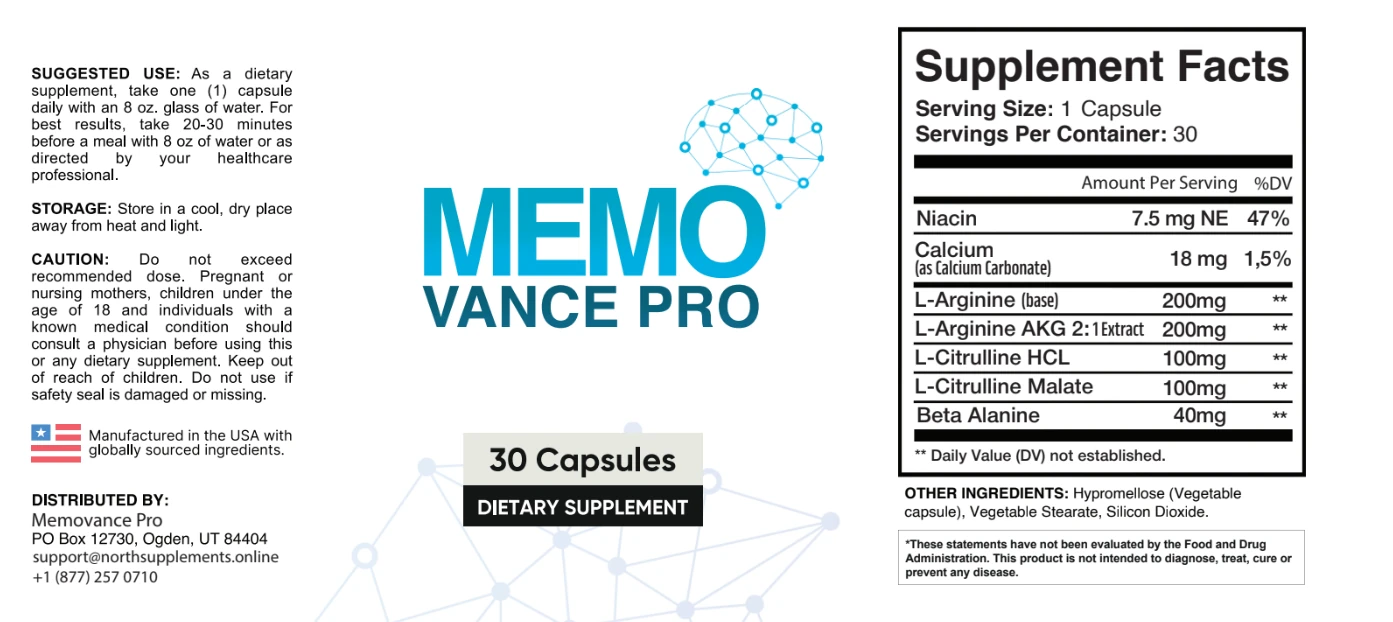
When the finished product has no trial, the next best step is to read each ingredient against its own research. This website does that. The table puts the label amount next to what the published work used.
| Label row | On this label | In the published research |
|---|---|---|
| L-Arginine (base) | 200 mg | Blood pressure moved only at 4 g a day or more. This row is a twentieth of that |
| L-Arginine AKG 2:1 | 200 mg | Both AAKG trials used 12 g a day. One 3,000 mg dose, fifteen times this row, changed nothing alone |
| L-Citrulline HCl | 100 mg | 3 g twice a day was the only dose that lifted the plasma arginine trough |
| L-Citrulline Malate | 100 mg | Performance trials used 6 to 8 g, 40 to 60 minutes before exercise |
| Beta Alanine | 40 mg | The ISSN position stand sets 4 to 6 g a day, for at least four weeks. Cognition trials that found anything used 2.4 g |
| Calcium (carbonate) | 18 mg | Levothyroxine interaction work used 500 to 1,200 mg |
| Niacin | 7.5 mg NE | A food-level amount. Cardiovascular trials used 2 g of extended-release niacin |
Taken from this website's research table. The sources named there are listed on the supplement facts and ingredients pages.
What does the gap between label and research mean?
It means the trial results cannot be carried over. A study that used 12 g a day says little about 200 mg. Anyone who quotes a trial in support of this capsule should say which amount the trial used.
The gap has one bright side. The same distance explains why the usual side effects are unlikely. A niacin flush needs far more niacin than 7.5 mg NE, and the beta-alanine tingle needs far more than 40 mg.
See what is on offer
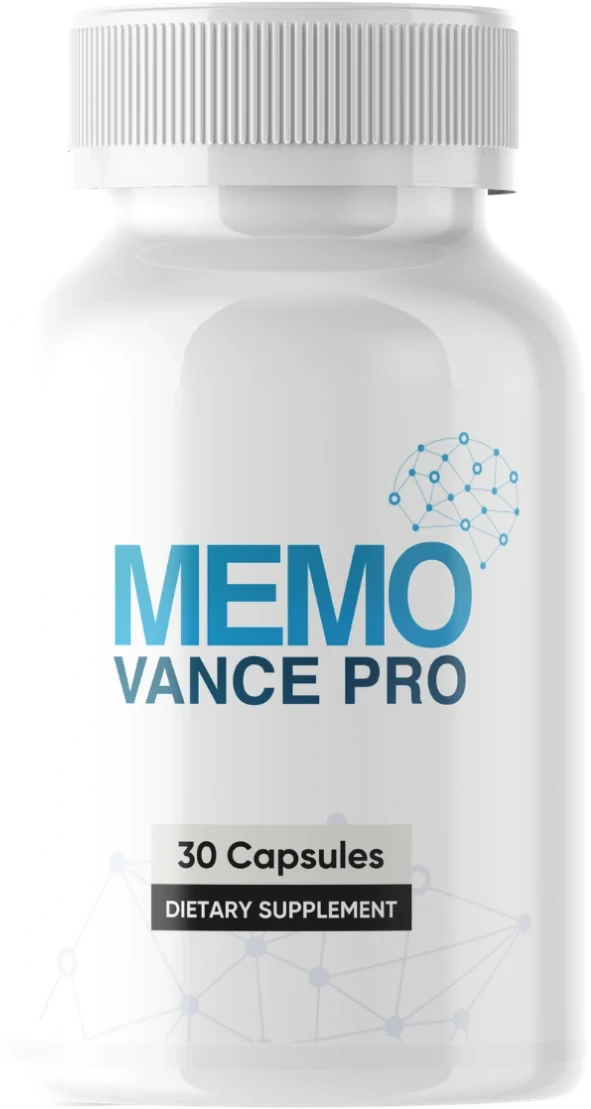
The checkout shows the packs, the shipping rules and the 180-day guarantee, which is the safety net for a product without a trial.
Two bottles $158 · three $207 · six $294
See today's price and guaranteeThis website is a retailer, not the manufacturer. This website is a retail channel and earns from orders placed through the checkout reached from its pages.
Is there any research on these ingredients and thinking?
A little, and it is mixed. The sources for this website include a few beta-alanine studies on cognition, and some of them found no change. One of them ran fourteen weeks and moved nothing. Others found gains at 2.4 g a day, which is many times the 40 mg printed here.
For the arginine and citrulline rows, the research is mostly about blood pressure and exercise, not memory. So the honest summary is that the evidence is thin for the claim the seller makes and absent for the finished capsule.
Do any MemoVance Pro before and after photos exist?
None are published. The seller shows a review summary, 4.7 out of 5 from 938 written reviews, and a roster of eight buyers. Those are opinions, not measurements. The two three-star entries are about speed, and nobody in the roster reports anything positive before day 46.
If you want your own before and after, build it. Write a few simple notes for a week before you start, then keep the same notes each week. We explain how in a separate article.
Is MemoVance Pro for Alzheimer's or memory loss?
No. It is not intended to diagnose, treat, cure or prevent any disease, and it is not a treatment for memory loss. Alzheimer's disease is a medical matter for a doctor.
If you or others have noticed a change in your memory, such as repeating questions or losing a familiar route, book an assessment. Book the assessment first, and think about supplements afterwards.
MemoVance Pro is a dietary supplement. It is not a drug, it is not FDA approved, and no supplement is. These statements have not been evaluated by the Food and Drug Administration. This product is not intended to diagnose, treat, cure or prevent any disease. For medical questions, for medicines you already take, or if you are pregnant or nursing, ask your doctor or pharmacist first.
How can you judge it fairly yourself?
- Pick two or three things someone else could check, such as how long you focus before reaching for your phone.
- Record them for a week before the first capsule.
- Take one capsule daily with 8 oz of water, 20 to 30 minutes before a meal, as the label says.
- Note sleep, alcohol and a stressful week, because they change the same numbers.
- Review at the 60 and 180 day marks, and use the guarantee if you are not satisfied.
Frequently asked questions
Is there a MemoVance Pro clinical trial?
Not one trial of the finished capsule is published. The research cited on this website was done on single ingredients, mostly at much larger amounts.
What does the MemoVance Pro evidence assessment show?
Each amino acid row is between a twentieth and a hundred-and-twenty-fifth of the amount its own trials used. The calcium row is far too small to interact with levothyroxine.
Is there before and after proof for MemoVance Pro?
None are published. The seller shows summary review figures and eight buyer comments, which are opinions rather than measurements.
Does MemoVance Pro help Alzheimer's disease?
No. It is not intended to diagnose, treat, cure or prevent any disease. See a doctor about any memory concern.
Do the beta-alanine studies prove it works for memory?
No. The studies used far larger amounts than 40 mg, and some found no change in thinking tests.
How long should I try it before I decide?
The distributor puts the typical wait at 3 to 4 weeks. The seller's page asks for at least 180-210 days. The guarantee runs 180 days from purchase.
Our view
A clinical trial is the clearest kind of evidence, and this capsule does not have one. Everything else is reasoning from single-ingredient research at larger amounts.
That is not a reason to panic. It is a reason to keep expectations modest, keep notes and use the refund window if the notes show nothing.
And if your memory has changed in a way that worries you or others, a doctor comes first.
Your own test is the only trial available
With no published trial, the 180-day guarantee is the fair way to run your own. Keep notes and decide on evidence you gathered.
180-day guarantee, opened bottles included
See today's price and guaranteeThis website is a retailer, not the manufacturer. This website is a retail channel and earns from orders placed through the checkout reached from its pages.
Last updated . Medically reviewed by Dr. Joette James, PhD on .
Research figures come from the sources named on this website, including the L-arginine dose-response meta-analysis, the ISSN position stand on beta-alanine and the JAMA levothyroxine study.